

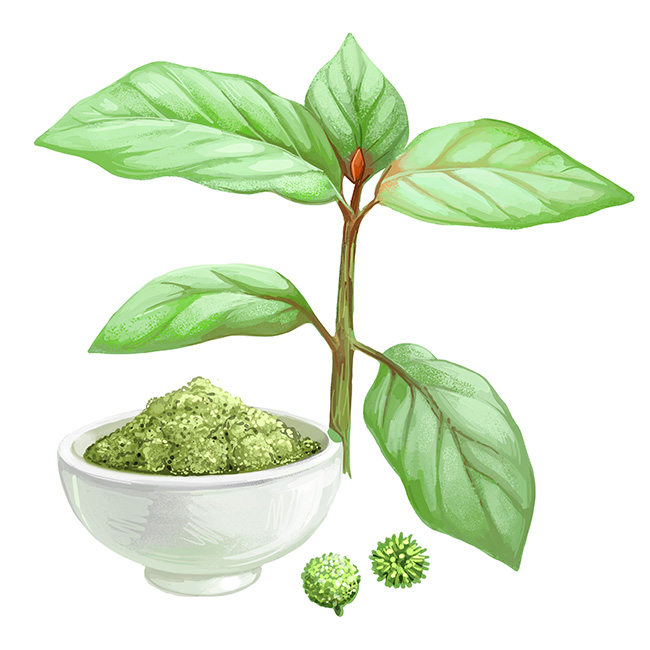
The public health issues associated with the use of kratom, a plant-derived substance sold in convenience stores, smoke shops, and herbal shops, continue to be of concern for lawmakers at every level of government. Kratom contains two primary compounds, mitragynine and 7-hydromitragynine (7-OH), that produce stimulant-like effects in lower doses but also have opioid-like effects in higher doses that can potentially result in overdose and death. Some users cite the substance’s pain relief properties, but the US Food & Drug Administration (FDA) has not approved kratom for any medical use.
To date, there has been limited federal regulation of kratom, and most of the regulatory activity that has occurred did so more recently. In August 2026, the Drug Enforcement Administration (DEA) temporarily classified three synthetic kratom compounds (mitragynine pseudoindoxyl [MGPI], MGM-15, and MGM-16) as Schedule I substances and, on October 14, 2026, the agency issued a notice of intent to publish a temporary order to add mitragynine and 7-OH, above a specified threshold, to Schedule I drugs. Schedule I drugs are determined to be the most dangerous, with no medical benefit and a high likelihood of abuse. However, a scheduling order will need to be posted to make this latter scheduling effective, and the timeline for that to happen is unclear; the FDA previously issued a similar notice of intent back in July 2026 that was rescinded with the October order, effectively restarting the process. So, while there may generally be federal intent to schedule some components of kratom, the regulation process has been moving slowly.
Given the lack of federal oversight until now, state and local governments have increasingly stepped into the regulatory vacuum. While several states have enacted various forms of kratom regulations—including sales restrictions, potency caps, and bans—local governments have often acted when state regulation has been absent, stalled, or has been viewed as incomplete. For example, while there are not yet statewide kratom bans in Illinois, Mississippi, or Washington, their respective local governments have been active in the space, passing bans on kratom generally or 7-OH more specifically. In Massachusetts, prior to an emergency order in August 2026 by the Massachusetts Department of Public Health that temporarily classifies kratom products as Schedule I drugs, around 25 local governments had already passed their own regulations.
As more municipalities contemplate stepping into the kratom regulation space, there are a few key things that they may want to consider when crafting their legislation.
Authority
Local governments seeking to regulate kratom must consider whether their state follows Dillon’s Rule or home rule principles, as these doctrines determine the scope of local legislative authority. In states with Dillon’s Rule, such as Nevada, Vermont, and Virginia, municipalities are more restricted and generally may exercise only powers expressly granted by the state, necessarily implied by those powers, or essential to their governmental functions. In particular, their state constitutions do not delegate police powers directly to local governments. States with home rule jurisdictions (such as Iowa, Oregon, and South Carolina), on the other hand, typically grant municipalities broader discretion to address local concerns, including public health and safety, but that authority is not unlimited. State laws may expressly preempt local regulation or implicitly occupy a regulatory field, and courts may then invalidate local ordinances that conflict with state law or exceed municipal authority. The level of authority available may also be different in some states for counties than for cities, towns, and villages.
For kratom-related regulations, this means local officials in some states can more easily pass restrictions on sales, possession, retailer licensing, and/or product distribution than others, depending on what their state authorizes. In New York, for example, municipalities have relatively substantial home rule powers under Article IX of the State Constitution and the Municipal Home Rule Law, but local laws must comply with applicable state law and remain subject to limitations involving matters of state concern and preemption.
Enforcement
Regulating kratom products can bring special enforcement considerations that local governments will have to consider. Unless already mandated by the state or local government, retailers selling kratom are not required to obtain a license or permit to do so, and there are no restrictions on where kratom products can be sold. This means that, unlike liquor stores and cannabis dispensaries, without some registration requirement, there would be no clear database of where products are sold, and finding violations of kratom regulations may be more labor-intensive. Kratom products may circulate in and out of inventory at gas stations, convenience stores, smoke shops, and wellness stores, and keeping track of who is selling what and where can require a fair amount of effort as well as resources.
… responding to concerns about kratom requires more than simply prohibiting its sale or possession.
Additionally, if a municipality is contemplating a ban on kratom products that is based on a threshold percentage of its compounds, rather than a broader ban on all kratom products, they need to consider the limitations of being able to enforce that ban. In the absence of federal standards set by the FDA, there are no central certification standards for the potency, contents, or safety of kratom products before they are sold. The result is that, in many cases, kratom product labeling is not accurate. A recent study by the University of Florida found that, in 85 percent of the kratom products analyzed, the actual concentration did not match the product’s labeling and that additional compounds or products were found in the samples that were not listed on the packaging. Therefore, if a municipality is relying on the existing packaging label to determine if a product violates its synthetic or potency cap, without additional requirements, the impact of the regulation may be much more muted. Testing kratom products to independently verify the accuracy of labels, however, may be outside the capacity and budget of most local governments and may require state collaboration or third-party testing by the kratom vendors.
Limiting Sales and/or Possession
When crafting kratom regulations, municipalities are faced with the choice of prohibiting or limiting the sale of kratom, prohibiting the individual possession of kratom, or both. A sales ban targets retailers and distributors, whereas a possession ban also affects individuals who purchase products in the jurisdiction or elsewhere, order them online, or already have them in their homes. Possession restrictions can therefore raise additional questions about enforcement priorities, searches and seizures, penalties for individuals, and whether criminal or civil sanctions are appropriate. Concerns may also be present about some of the lessons learned from the War on Drugs, including disproportionate arrests and prosecutions of people of color for drug possession and the impact of pivoting away from viewing kratom as a public health issue and instead viewing it as a punitive criminal justice issue. Given that many states have legalized cannabis in some capacity, in part because of concerns over the impact of its criminalization on individuals, there may be pushback over introducing possession restrictions on kratom.
Rehabilitation
Regulating the availability of kratom does not eliminate the health needs of people who use it. For individuals who have developed dependence, abruptly losing access to the substance may lead to withdrawal symptoms and a need for clinical support. Tennessee’s 2026 ban has already resulted in an increase in people seeking treatment for withdrawal, and similar patterns have been observed in Florida and Kansas. Withdrawal symptoms can include joint pain, insomnia, feverish sensation, tremors, itching over the body, and chills, and those who are going through withdrawal may turn to other drugs, like fentanyl, to alleviate the symptoms. A sudden influx of patients experiencing kratom detox can be a challenge for local healthcare resources and can increase the potential of an illicit market for kratom and other drugs. These impacts may be able to be mitigated by pairing any proposed kratom regulations with public education campaigns about available resources for recovery and the health risks from kratom use, as well as a phased implementation period on any possession prohibitions to allow the tapering of use rather than quitting cold turkey. How to aid kratom users, especially those who may not have realized that they have developed dependency on it, should be a consideration of any local government thinking about banning or regulating the substance in ways that don’t themselves result in potential harm. Ultimately, a well-designed ordinance could specify not only what is prohibited and how violations will be enforced, but also how the community will address the needs of people affected by the ban.
Conclusion
As kratom regulation continues to evolve at the federal and state levels, local governments will likely remain important players in shaping how the substance is regulated and how its public health impacts are addressed. However, responding to concerns about kratom requires more than simply prohibiting its sale or possession. Municipalities must ensure that proposed regulations fall within their legal authority, establish realistic and enforceable standards, consider the potential consequences of criminalizing possession, and account for the treatment and recovery needs of individuals who may be dependent on the substance. Ultimately, the effectiveness of local kratom regulations will depend not only on what governments seek to prohibit, but also on how they implement and enforce those restrictions and what resources they make available to affected residents. As more communities consider taking action, these lessons will be critical to developing policies that protect public health without creating additional unintended consequences.
ABOUT THE AUTHOR(S)
Heather Trela is director of operations and fellow at the Rockefeller Institute of Government.