
This past weekend, the US news cycle was once again rocked with headlines declaring that another mass shooting had occurred—this time at Brown University in Providence, Rhode Island (tragically, the news also was filled with reports of a mass shooting in Australia). During the attack at Brown, two students were killed, and nine others were injured. As law enforcement continues to investigate the crime, the Brown and Providence communities have begun the complex process of navigating the aftermath of this traumatic event.
As those of us outside these communities think about what we can do to help support those who have been impacted, it is important that we engage in practices that will achieve this end and do so in a way that most benefits the survivors.
A note from a member of our team
As a former member of the Brown community, I had the privilege of working with incredibly kind and talented students and faculty during my time on campus and seeing that academic community interrupted by violence is deeply upsetting. My heart goes out to everyone on campus, and I hope that our research at the Institute can provide some small amount of help and support to the survivors.
— Leigh Wedenoja, chief economist at the Rockefeller Institute. Leigh served as a postdoctoral research associate at Brown University from 2017 to 2019.
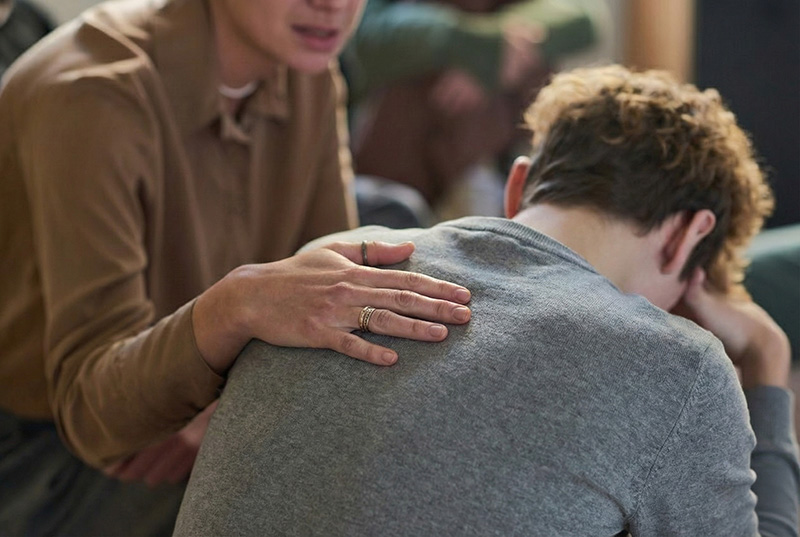
As Regional Gun Violence Research Consortium members have previously noted, one of the most important things that we can do is acknowledge the lived experiences of these individuals. Create spaces where survivors can share their stories. Listen with purpose and intent (and without judgment), and avoid saying “I know how you feel,” opting instead for phrases such as “I can understand how that would have been impactful.” Avoid asking invasive questions, even those that are well-meaning or well-intentioned. The most important thing is to create safe spaces for individuals who likely are not feeling safe at the moment.
Of course, we all want to support those who have been impacted. But even well-intentioned assistance is not helpful if it doesn’t meet the needs of those in crisis. For example, sending flowers or bears to the school, while visually signaling support, can create an undue burden for those in the affected community to manage clean-up and cataloguing. Donating money instead to help support carefully vetted counseling services for survivors often is more helpful, and the University will likely share information on where such contributions can be made in the days and weeks ahead.
It also is important to keep in mind that countless people will have been impacted by the shooting—some of whom this is not their first experience with mass violence—and, as such, it is critical to avoid assuming who a survivor is. Of course, much of the focus will be on those who lost loved ones or friends or who were physically injured, but the footprint of this tragedy is far greater than that, encompassing students, faculty, staff, and visitors not only who were in the building when the shooting occurred but also on campus and in the broader community. They, too, will experience trauma as a result of this event. Moreover, there also are both first and second responders who will need support.
As we move ahead in the coming days, weeks, and months, it is vital that we support survivors along their journey, one that will last long after the glare of the media spotlight fades. And in doing so, it is imperative that we seek to offer such support in ways that will be most effective for the survivors.
For more information and resources, visit Supporting Mass Shooting Survivors.
ABOUT THE AUTHOR(S)
Jaclyn Schildkraut is the executive director of the Regional Gun Violence Research Consortium (RGVRC) at the Rockefeller Institute of Government.