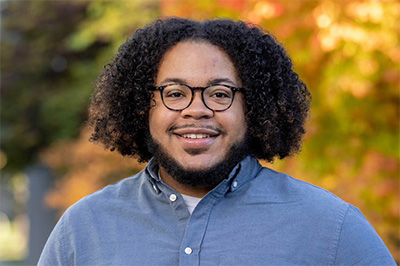
Postdoctoral Research Fellow, Regional Gun Violence Research Consortium.
Caleb Cuthbertson, PhD, LMFT, is a postdoctoral research fellow with the Regional Gun Violence Research Consortium at the Rockefeller Institute of Government. His research focuses on the psychological and relational consequences of firearm injuries for individuals, families, and communities. Cuthbertson earned his PhD in human development and family science, specializing in couple and family therapy, from The Ohio State University. His dissertation examined the psychological and relational experiences of survivors of nonfatal firearm injuries and their family members using a dyadic, narrative approach. His work highlights that the consequences of firearm injury extend beyond the individual who sustains the physical wound, emphasizing the interdependent nature of trauma, mental health, coping, and recovery within family systems.
As a licensed marriage and family therapist, Cuthbertson brings a clinically informed and systems-oriented perspective to gun violence research. Prior to his postdoctoral fellowship, he served as a Graduate Research Associate at The Ohio State University, contributing to suicide prevention research and intervention efforts for youth experiencing homelessness. This experience, alongside his clinical work with individuals and families affected by trauma, informs his broader research interests in firearm injury prevention and intervention, hospital-based violence intervention programs, mental health help-seeking, and the experiences of Black families and communities affected by violence. His commitment to family- and community-centered approaches to violence prevention also led to his selection as an inaugural training and mentorship fellow with the Black and Brown Collective for Community Solutions to Gun Violence.
Through his postdoctoral fellowship with the Regional Gun Violence Research Consortium, Cuthbertson seeks to advance interdisciplinary research that bridges scholarship, clinical practice, community engagement, and policy. His long-term program of research seeks to expand the field’s understanding of firearm violence as an experience that reverberates throughout family and community systems and to inform interventions and policies that promote healing and recovery for the survivor and those they are connected to.