
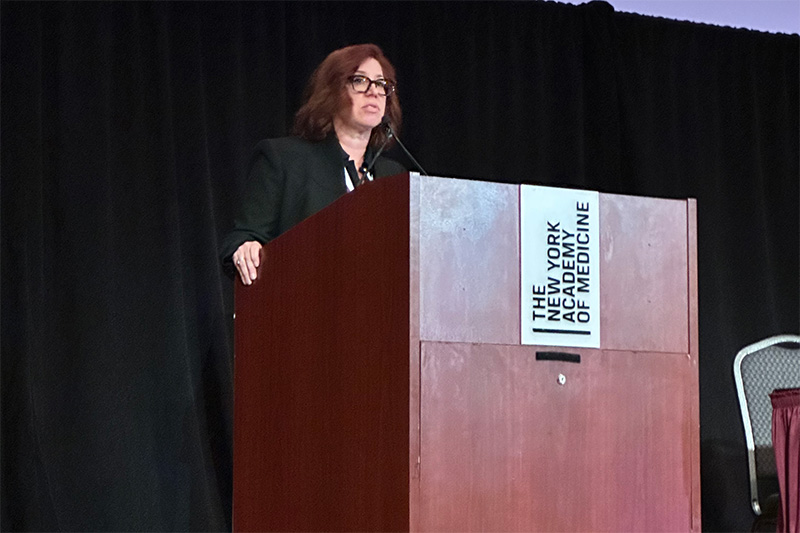
Experts with the Regional Gun Violence Research Consortium (RGVRC) address different facets of firearm violence from a variety of perspectives and disciplines. In this series, get to know our experts and learn more about their contributions to better understand, prevent, and respond to the public health crisis of firearm violence. Meet Christen Rexing, a scholar with the RGVRC and the executive director of the Society for Advancement of Violence and Injury Research (SAVIR).
What led you to become interested in gun violence prevention efforts?
I came into public health from a background in history and political science, knowing that politics shaped policy and policy determined health outcomes. Injury topics were at the forefront of my interests when I started my MPH, with a strong interest in workers’ health and active-duty military and veterans. My undergraduate history advisor had two research projects: 1) studying the exportation of NRA ideology around the world, and 2) understanding the United States’ small arms trade following conflicts and the health outcome on international communities. I helped her with the projects and never looked back. For my own graduate and post-graduate work, I turned my focus domestically, understanding ideology and other social and political characteristics in the dissemination and adoption of laws.
How does your current role enable you to focus on gun violence prevention?
In 2023, I left my full-time faculty position to become the executive director of the Society for Advancement of Violence and Injury Research (SAVIR). SAVIR’s mission is to promote high-quality research in violence and injury prevention and to translate and disseminate research findings across the spectrum of science, practice, and policy communities through research, research dissemination, advocacy, and training. As executive director, I get to connect the science community with each other for mentorship and training and advancing science, support students entering the field, and promote the great work to practice partners, the public, and policymakers. Injury and violence prevention research, specifically firearm research, has a storied history of underfunding. As executive director, I spend much of my time educating lawmakers on how critical it is to fund research, highlighting the work of the research community and the critical work they do to save lives. I also spend a lot of my time making sure students and early career researchers are connected to the field and each other, so the scientists are trained and ready to make sure the work continues. It’s a great honor and privilege to support gun violence prevention research in this capacity.
What do you hope to teach people about gun violence prevention?
My gun violence prevention education is grouped into four buckets: lawmakers, students, everyday people, and fellow researchers. For lawmakers, I hope that they see that we are all working towards creating safer communities and that we can do that work in partnership via funding good science and enacting evidence-based solutions to issues we all care about, such as suicide prevention and community violence prevention. For students, I want them to learn that there is a strong science community they can connect with to do great work in spaces across the country, that gun violence prevention researchers are among the most welcoming and collaborative, and that they should pursue their research questions in collaboration with a diverse team. I spend a lot of time educating everyday people about the fact that we can solve issues they have concerns about, such as community and school safety, debunking myths they’ve heard about our work and its intent. For my fellow researchers, what I want them to know about gun violence prevention research is that we cannot stay silent on our work. We must educate policymakers and the public on the impact our research has in saving lives and making communities safer. This past year alone, we almost lost funding for gun violence prevention research, but through a large effort, we showed the impact of our work and saved critical funding.
Learn more about Christen and her work for the Regional Gun Violence Research Consortium below.