Untangling the Intersection of Race/Ethnicity with Nativity Status in the Lives of Foreign-Born Americans: Charting a Path Forward

Foreign-born Americans from non-European countries may face discrimination in hiring, wages, and promotions. They may earn less than their White native-born counterparts even with comparable education and experience. They may also be disproportionately funneled into low-paying, high-risk jobs, which limit upward mobility. Discriminatory practices are also experienced in housing, leading to neighborhood segregation. Foreign-born of color often live in marginalized neighborhoods due to systemic racism in housing policies and affordability issues. These neighborhoods are frequently exposed to pollution, poor infrastructure, and lower access to clean air, water, and healthy food. Children of racialized immigrant backgrounds may have unequal access to education as they are more likely to attend underfunded schools and face language barriers without adequate support. They may experience racism from peers or educators, leading to lower self-esteem, academic disengagement, and disciplinary disparities. Their history and perspectives are excluded from the curricula. Foreign-born of color may receive lower quality care due to language barriers, implicit bias, and racism in the healthcare system. They may also report lower health outcomes than their White counterparts. They may also experience increased risk of anxiety, depression, and trauma because of cultural dislocation, xenophobia, and racism. Media and political discourse may also contribute to the stigmatization of foreign-born of color and fuel exclusionary narrative and policies leading to disintegration, providing fertile grounds for hate crime, violence, social stigma, stereotypes, marginalization, and hostility.  In this webinar, we examine theory-driven models of promoting cross-cultural understanding and examine frameworks for fostering cross-racial, inclusive, and harmonious relations. Best practices in integrated schooling, intercultural exchange, workplace diversity initiatives, identity-based education, and multicultural policies that affirm multiple group identities and culturally responsive teaching and learning will be examined.

Panelists

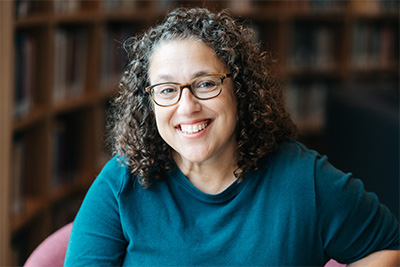
Ana Christina da Silva Iddings

Ana Christina da Silva Iddings

Professor of the Practice of Education, Department of Teaching and Learning, Vanderbilt University

Dr. Ana Christina da Silva Iddings is a professor of the practice of education at Vanderbilt University’s Department of Teaching and Learning, where she works in the Learning, Diversity, and Urban Studies area. She completed her Ph.D. (2001) at the University of Nevada-Las Vegas in curriculum and instruction, focusing on TESOL and applied linguistics, with additional study in sociology and anthropology. Her academic career includes faculty appointments at the University of Arizona (assistant, associate, and professor roles in language, literacy, and culture) and earlier service at Vanderbilt’s Peabody College (including leadership as director of Elementary Education Programs) and UNLV.

Her scholarship and professional practice emphasize how schools and communities can foster more equitable learning opportunities for multilingual learners. Vanderbilt describes her work as taking an ecological perspective on multilingual learners’ access to learning—studying young children’s experiences in classrooms, and exploring how teachers can learn from and draw upon family and community resources to support students.

Dr. da Silva Iddings has also contributed to major professional publications, including editing a 2017 volume on redesigning teacher education for culturally and linguistically diverse students, and co-authoring a Cambridge University Press book on cooperative learning in second-language classrooms. Her recognitions include the Peabody Equity, Diversity, and Inclusion Faculty Award and other fellowships supporting public scholarship and community-engaged work. She also brings 13+ years of Pre-K–2 teaching experience in the US and Brazil.
Read More
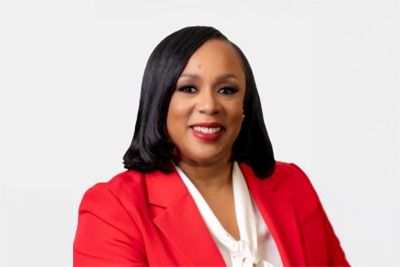
Alicia L. Hyndman

Alicia L. Hyndman

Assemblymember, Assembly District 29, New York State Assembly

Assemblywoman Alicia L. Hyndman was elected to the New York State Assembly on November 3, 2015, in the 29th Assembly District, encompassing the neighborhoods of Laurelton, Rosedale, St. Albans, Addisleigh Park, Hollis, Springfield Gardens, and Jamaica. The daughter of Caribbean immigrants, Assemblywoman Hyndman emigrated to the US from London, England, as a young child. She spent her formative years growing up in Hollis and South Ozone Park, attending public schools P.S. 34, I.S. 109, J.H.S. 226, and John Adams High School.

Assemblywoman Hyndman serves as the chair of the Standing Committee on Higher Education. Prior to being elected to the State Assembly, Ms. Hyndman served on the New York City Department of Education’s Community District Education Council 29 (CEC29) for 10 years, the last four years as president. Leading advocacy for the 36 elementary and middle schools in the district, through collaborative leadership, she was able to bring in $30 million in capital funding for technology upgrades, facilities improvements, playground rehabilitation, and other amenities to enhance the quality of education for students.

Assemblywoman Hyndman’s professional career spans over 15 years with the New York State Department of Education as a senior professional conduct investigator, overseeing adult trade and vocational schools. She previously held many positions in the field of education, including but not limited to: counselor for the Brooklyn College Educational Talent Search Program; director of minority affairs at the New York College of Osteopathic Medicine of NYIT; and assistant with the New York State Education Department Office of Higher Education. Her dedication to career education is exemplified by the bills she has brought forth in the New York State Assembly.

As a longtime education advocate, Assemblywoman Hyndman has focused heavily on creating educational opportunities for the Queens community through the redevelopment of John F. Kennedy International Airport, growing small businesses, and providing access to living-wage jobs and entrepreneurial opportunities. She has continued her advocacy by authoring the landmark legislation of Juneteenth Day in New York State, which is now observed statewide.

Assemblywoman Hyndman holds a Bachelor of Arts Degree from the State University of New York at New Paltz and a Master’s Degree in Public Administration from Framingham State College in Massachusetts. She is a member of Delta Sigma Theta Sorority, Inc., and a member of the Queens Chapter of Jack & Jill. She currently resides in Laurelton, Queens, with her family.

Read More
Dina Refki

Dina Refki

Executive Director, Institute on Immigrant Integration Research and Policy

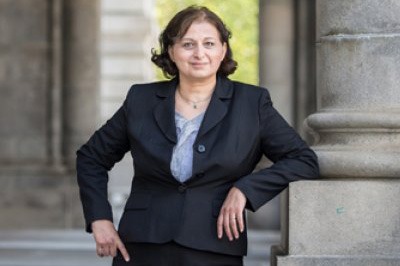
Dina Refki is the director of the Center for Women in Government & Civil Society (CWGCS) at the University at Albany. Refki studies and researches the interplay of gender with institutional structures in the US and international context. She applies gender mainstreaming and budgeting analysis from transnational perspectives. Prior to assuming leadership at CWGCS in 2009, she held different positions at the Center, including as director of the Immigrant Women & State Policy Program, which facilitated interagency collaboration, promoted dialogues with civil society and immigrant women at the state level, and worked to identify and address barriers to the integration of immigrant women in the social, economic, and political fabric of local communities. Refki studies the challenges of migration, the barriers facing immigrant women and their families, and the structural changes needed to better respond to the needs of immigrant women.

Read More
Adam Strom

Adam Strom

Executive Director, Re-Imagining Migration

Adam Strom brings a unique blend of personal and professional dedication to education about migration. Growing up in a family whose roots trace to Jewish immigrants from Eastern Europe, and now married to the daughter of an Ecuadorian immigrant, his commitment to building empathy and understanding across differences is deeply personal. As an educator who taught first- and second-generation immigrant students, Adam co-founded Re-Imagining Migration to address a critical gap in education: creating learning environments where migration experiences are understood as fundamental to our democracy, where schools become models of inclusion, and where belonging drives academic success and thriving communities. After beginning his career in Hollywood, he served as program director at the Tenement Museum before joining the senior leadership team at Facing History and Ourselves. Educational resources developed under Adam’s direction have reached millions of students in tens of thousands of classrooms worldwide, including books, lessons, and films on immigration, civil and human rights, genocide, and prejudice.

Read More
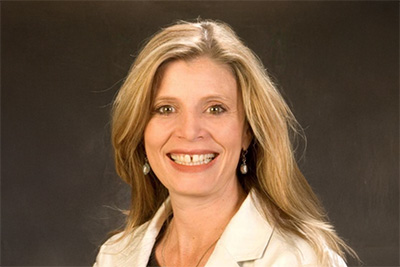
Linda R. Tropp

Linda R. Tropp

Professor of Social Psychology, Endowed University Chair in Peace Psychology, and Faculty Associate in Public Policy, University of Massachusetts-Amherst

Linda R. Tropp is professor of social psychology, endowed university chair in peace psychology, and faculty associate in public policy at the University of Massachusetts-Amherst. For nearly three decades, she has studied how members of different groups experience contact with each other and how group differences in status affect cross-group relations. Her work seeks to foster the dual goals of promoting positive relations between groups while achieving ever-greater levels of societal equality and justice. She has worked with US-based organizations on initiatives to promote racial integration and equity, and with civil society organizations around the globe to bridge group differences and address social division. A fellow of the American Psychological Association, Tropp has received distinguished research and teaching awards from the Society of Experimental Social Psychology, the Society for the Psychological Study of Social Issues, and the International Society of Political Psychology. Tropp is coauthor of When Groups Meet: The Dynamics of Intergroup Contact (2011) and editor of several books, including Moving Beyond Prejudice Reduction: Pathways to Positive Intergroup Relations (2011), the Oxford Handbook of Intergroup Conflict (2012), and Making Research Matter: A Psychologist’s Guide to Public Engagement (2018).

Read More
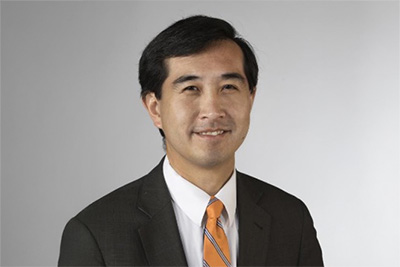
John C. Yang

John C. Yang

President and Executive Director of Asian Americans Advancing Justice (AAJC)

John C. Yang is the president and executive director of Asian Americans Advancing Justice (AAJC) in Washington, DC, where he leads the organization’s mission to advance the civil and human rights of Asian Americans and to build and promote a fair and equitable society for all through policy advocacy, litigation, education, and community empowerment. Because of his extensive legal experience and expertise, John has testified before Congress and appeared regularly in national media on issues of importance to the Asian American community.  He has served in leadership positions for the American Bar Association, the National Asian Pacific American Bar Association, and the National Council of Asian Pacific Americans, among many others. Prior to Advancing Justice (AAJC), John had served as a political appointee in the Obama administration, the Asia-Pacific legal director of a Fortune 200 company, and as a partner at a large DC-based law firm. He also serves on the diversity council for several Fortune 500 US companies.

Read More